
Lighting Design for Calm, Timeless Homes
Why Lighting Design Is the Foundation of Quiet Luxury
At Chapter Seven Design, lighting design is one of the quiet luxury principles we return to on every project, whether we’re designing a whole house renovation, a new build, or a series of key family spaces. It’s also one of the most common areas homeowners leave too late, which can make even the most beautiful scheme feel underwhelming.
This guide explains what layered lighting is, how it works, and how to plan it early so your home feels calm, tailored and considered, morning to night.
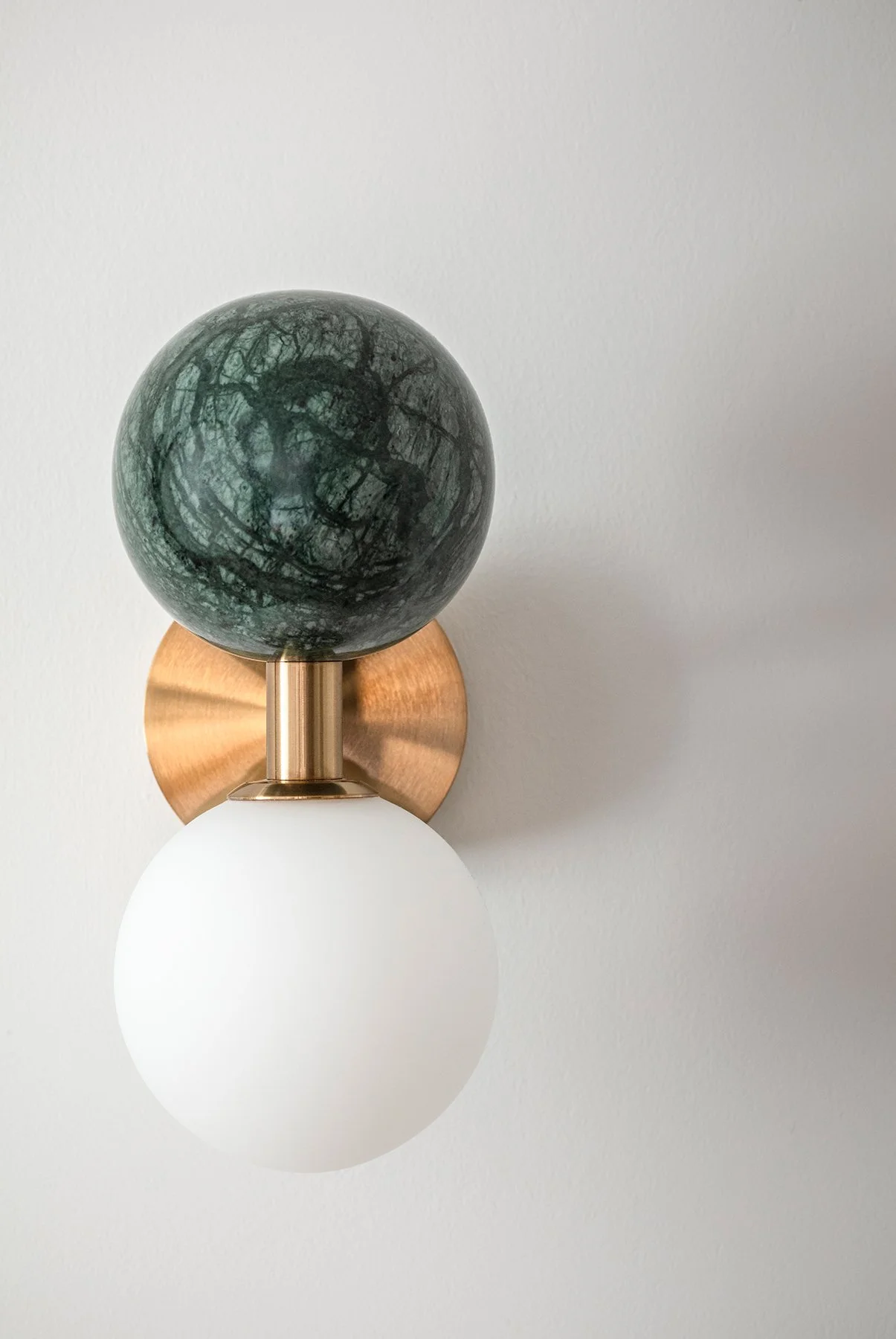
What is lighting design ?
Lighting design is simply means using more than one type of light in a room, so the space feels balanced, flattering, and flexible from morning through to evening. Rather than relying on a single ceiling light (or a grid of downlights) to do everything, we build light in layers so you can shift the mood depending on how you’re using the space.
It is one of the simplest ways to make a home feel calm, refined, and intentionally designed without relying on trends. And in substantial renovations and new builds, it’s something we plan early, because it influences everything that follows: proportions, joinery details, how you move through the rooms, and how the house needs to work for family life and hosting.
Why Is Lighting Is the Foundation of Quiet Luxury
Quiet luxury doesn’t shout. It’s felt in the ease of a space, the way it supports real life, looks flattering at every hour, and feels considered without trying too hard.
Relying on a single light source often creates a room that feels flat, harsh, or unfinished. Lighting design solves that by giving you options and creating light from multiple directions, which adds depth and softness.
A useful rule of thumb: if you can switch on one light and the room still feels “right”, your lighting has likely been thoughtfully layered.
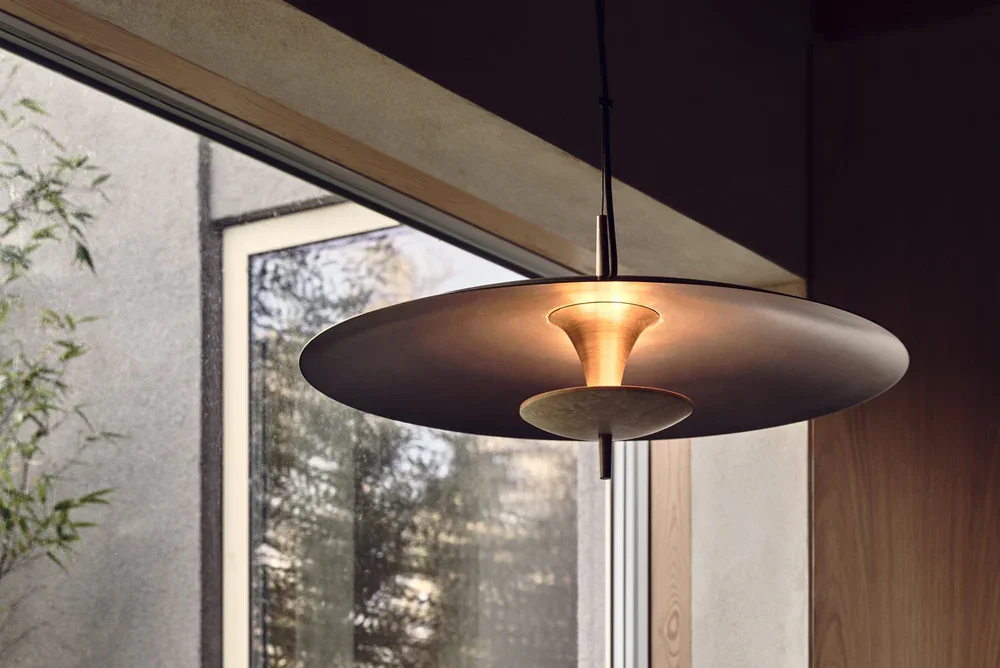
Luna 450 Pendant by J Adams & Co
Ambient lighting: your calm base layer
Ambient lighting is your overall, gentle foundation, the light that makes a room usable and comfortable as a starting point.
In many homes, ambient lighting becomes “lots of downlights,” but downlights alone rarely create a calm feel. Used carefully, they can be part of the plan, but they shouldn’t be the plan. A considered ambient layer might include discreet ceiling lighting, soft indirect light, or well-placed fittings that suit the scale of the space.
The goal isn’t brightness. It’s a balanced base that feels calm and flattering.
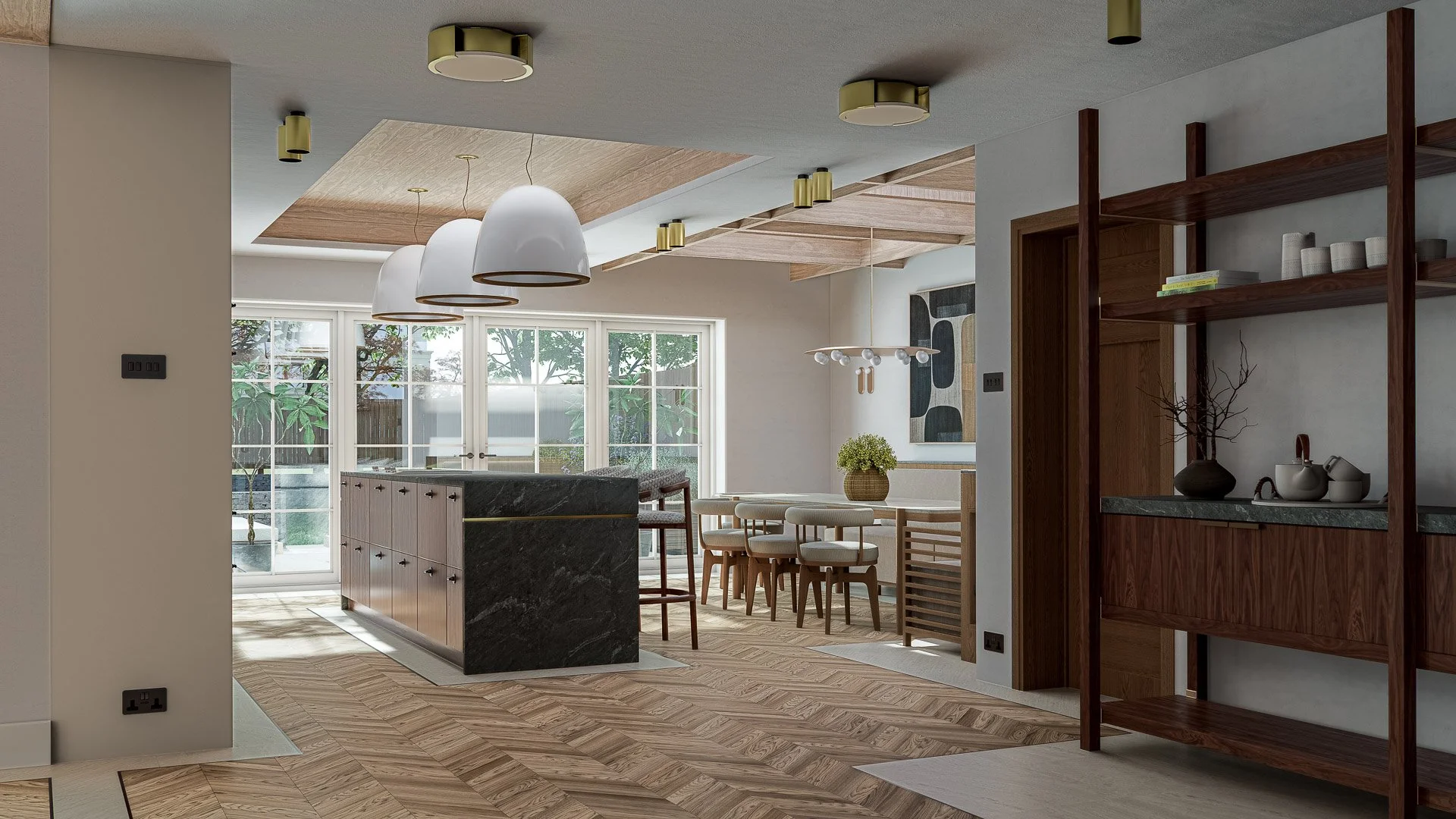
Design by Chapter Seven Design
Task lighting: light where you live
Task lighting supports the practical moments that happen every day, without compromising the style of the room.
We focus task lighting around how you actually use the space: cooking, reading, getting ready, working, homework, and the quiet routines that make a home run smoothly. When it’s planned properly, it reduces shadows, improves comfort, and makes daily life easier, while still feeling integrated and intentional.
This is particularly important in family homes, where functional zones are always on show.
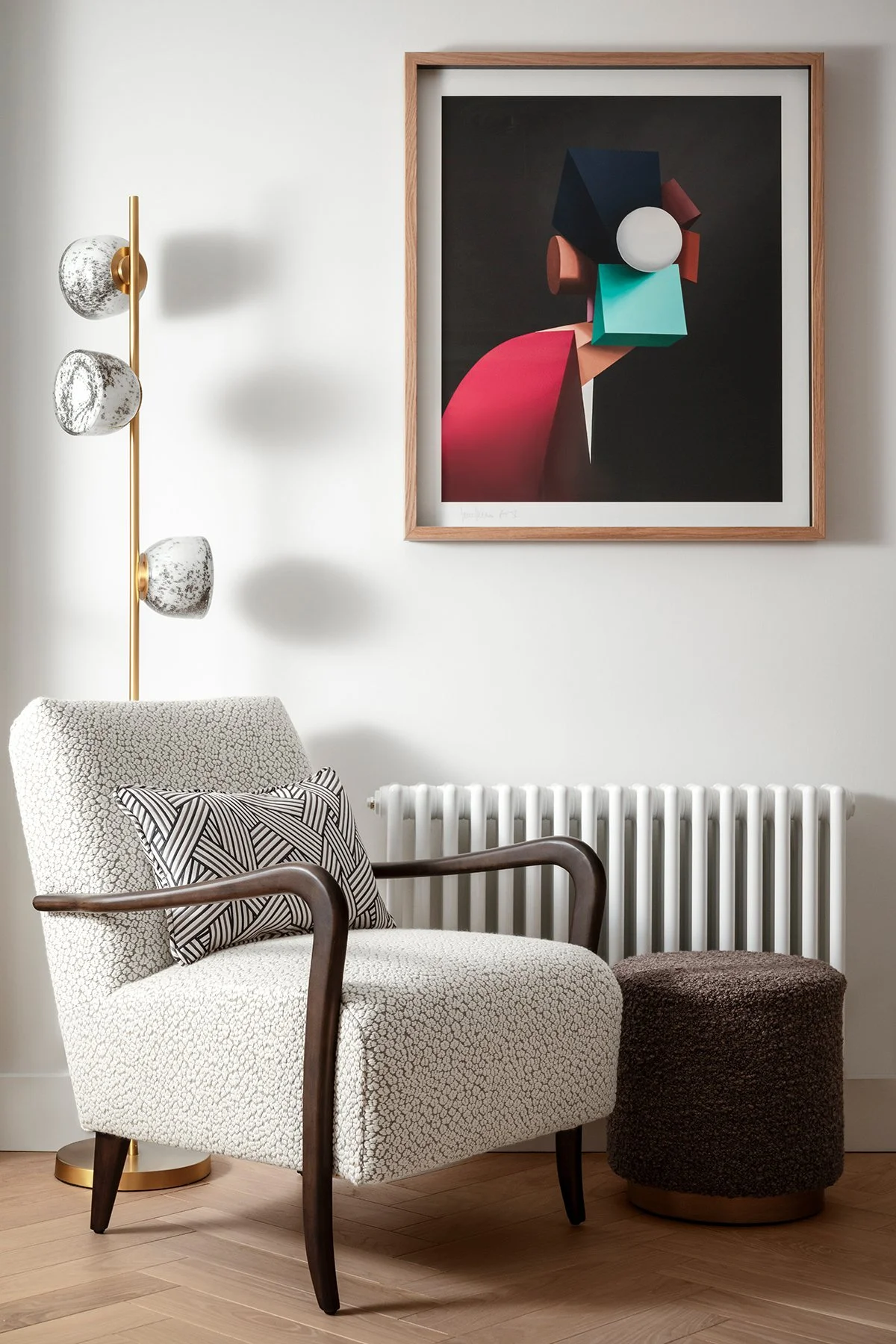
Interior Design by Chapter Seven Design
Accent lighting: depth, warmth, and atmosphere
Accent lighting is the layer that makes a space feel finished. It brings warmth, depth, and that “considered” quality clients often notice but can’t always name.
This is where wall lights, picture lights, and subtle LED details come into their own, especially when integrated into bespoke joinery or used to highlight texture and form. Accent lighting creates gentle pools of light, adds contrast in the right places, and elevates the atmosphere in the evening.
If you want a room to feel quietly luxurious after dark, this is usually the missing piece.
Plan Lighting Early: the Decision That Elevates Everything Else
Lighting design is best planned alongside the architecture of your home, not added at the end. In a home renovation or new build, it isn’t a finishing touch; it’s a core design decision that shapes how each room feels, functions, and flows.
When lighting is left too late, options narrow quickly. Ceiling plans may already be fixed, electrical locations can end up driven by convenience rather than design, and the scheme often defaults to a blanket of downlights simply because there’s little time to explore better solutions. That’s when you miss the details that create quiet luxury: integrated LED within bespoke joinery, wall lights that bring softness in the evening, and accent lighting that highlights natural materials and architectural features.
Planned early, lighting design becomes part of the structure of the space. We can coordinate it with your space planning, joinery layouts, kitchen and bathroom design, and furniture placement, so every circuit has a purpose. The result is a home that adapts beautifully: bright and practical when you need it, warm and atmospheric when you don’t. Switches feel intuitive, zones are properly layered, and the house looks as good after dark as it does in daylight.
At Chapter Seven Design, we help our clients make confident, informed choices that elevate their homes for years to come.
As an accredited SBID member, Chapter Seven Design brings recognised expertise to every project. If you’re planning a renovation or looking to transform your home, contact Chapter Seven Design to begin your project, or explore our full range of Midlands interior design services to see how we can support you. We would be delighted to guide you through the next steps.
Written by Andy & Joe